
What you can't put in the trash in Massachusetts
Updated September 2026 · by JUNKRUN, Melrose MA
Massachusetts bans a list of materials from disposal. For a household, the ones that matter most are mattresses and box springs, textiles, white goods (large appliances), cathode ray tubes (old tube TVs and monitors), leaves and yard waste, metal, glass, metal and plastic containers, recyclable paper, lead batteries, tires and wood.
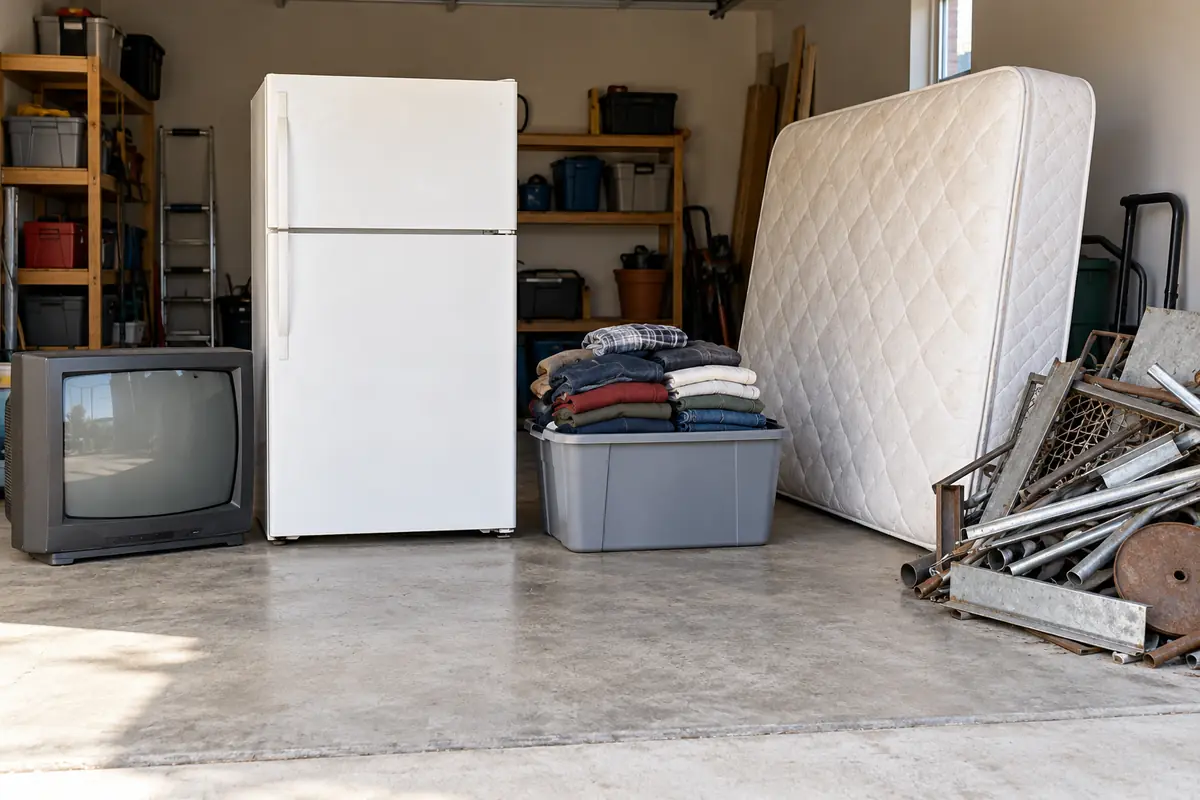
The banned materials
MassDEP's waste disposal bans, in Section 19.017 of the Solid Waste Management Facility Regulations (310 CMR 19.000), prohibit these materials from disposal at solid waste facilities: asphalt pavement, brick and concrete; cathode ray tubes; clean gypsum wallboard; commercial food material; glass, metal and plastic containers; lead acid batteries; leaves and yard waste; mattresses; ferrous and non-ferrous metals; recyclable paper, cardboard and paperboard; textiles; whole tires; white goods; and wood. Wood and whole tires are banned from landfills only. The full list and current details are on mass.gov.
The bans apply to the disposal facilities, and materials are diverted to reuse or recycling instead. Some exceptions apply, for instance for certain facility types. Check mass.gov for the specifics.
The ones that trip up households
| Material | What it means at home | What to do |
|---|---|---|
| Mattresses and box springs (since Nov 1, 2022) | Cannot go out with the trash. | Town program, retailer take-back, donation, or a hauler. |
| Textiles | Clothing, linens and similar items are banned from disposal. | Donate for reuse or use your town's textile collection. |
| White goods | Large appliances such as refrigerators, washers, dryers, stoves. | Town program, retailer haul-away, scrap metal, or a hauler. Refrigerants must be recovered. |
| Cathode ray tubes (CRTs) | Old tube TVs and monitors. | Electronics recycling day, retailer take-back, or a hauler with e-waste handling. |
| Leaves and yard waste | Cannot go in the trash. | Town yard-waste program, composting, or a hauler. |
| Metal | Scrap metal, including furniture frames and fixtures. | Scrap yard or transfer station metals area. |
| Wood, brick, concrete, asphalt, clean gypsum wallboard | Mostly from renovation work. | Construction debris hauler or recycler. |
What is not on the list, but still not for the trash
Hazardous products (paint, solvents, pesticides, propane tanks), asbestos and medical sharps have their own rules and are not something a curbside pickup or a junk hauler handles. Contact your town's hazardous waste program.
How JUNKRUN handles the banned items
- Mattresses ($89–$129) and box springs ($59–$99): recycled, fee included.
- Appliances ($79–$149): freon recovery included.
- Flat-screen TVs ($59) and tube TVs ($99): certified e-waste handling.
- Yard waste and construction debris: priced by the load.
Dates and exceptions worth knowing
The construction and demolition bans came in two steps. The disposal bans on asphalt pavement, brick, concrete, metal and wood took effect on July 1, 2006, and the ban on clean gypsum wallboard took effect on July 1, 2011. MassDEP's FAQ notes that wood may be disposed of at municipal waste combustion facilities.
The mattress and textile bans began on November 1, 2022. Because the bans are written for the disposal facilities, your town and its hauler enforce them by refusing banned items at the curb or the transfer station.
Household hazardous products, such as paint, pesticides, motor oil and batteries, are handled separately from the disposal bans. The EPA says that improper disposal of household hazardous waste can include pouring it down the drain and putting it out with the regular trash, and that many communities have collection programs for HHW.
Quick answers
What is banned from the trash in Massachusetts?
+
MassDEP bans asphalt pavement, brick and concrete; cathode ray tubes; clean gypsum wallboard; commercial food material; glass, metal and plastic containers; lead acid batteries; leaves and yard waste; mattresses; ferrous and non-ferrous metals; recyclable paper, cardboard and paperboard; textiles; whole tires; white goods; and wood from disposal.
When did the mattress ban start?
+
November 1, 2022, the same date the textile ban began.
Do the bans apply to my household trash?
+
They apply to the disposal facilities, which means your hauler and town are required to keep these materials out of the waste stream. In practice, banned items get refused at the curb or the transfer station.
Sources
- MassDEP: Waste disposal bans: “Asphalt pavement, brick and concrete”
- MassDEP: Waste disposal bans: “Cathode ray tubes”
- MassDEP: Waste disposal bans: “Clean gypsum wallboard”
- MassDEP: Waste disposal bans: “Commercial food material”
- MassDEP: Waste disposal bans: “Glass, metal, and plastic containers (bottles, cans, jars, jugs and tubs)”
- MassDEP: Waste disposal bans: “Lead acid batteries”
- MassDEP: Waste disposal bans: “Leaves and yard waste”
- MassDEP: Waste disposal bans: “Mattresses (effective November 1, 2022)”
- MassDEP: Waste disposal bans: “Ferrous and non-ferrous metals”
- MassDEP: Waste disposal bans: “Recyclable paper, cardboard and paperboard”
- MassDEP: Waste disposal bans: “Textiles (effective November 1, 2022)”
- MassDEP: Waste disposal bans: “Whole tires (banned from landfills only; shredded tires acceptable)”
- MassDEP: Waste disposal bans: “White goods (large appliances)”
- MassDEP: Waste disposal bans: “Treated and untreated wood and wood waste (banned from landfills only)”
- MassDEP: Construction and demolition materials waste ban FAQ: “took effect on July 1, 2006”
- MassDEP: Construction and demolition materials waste ban FAQ: “The disposal ban on clean gypsum wallboard took effect on July 1, 2011”
- MassDEP: Construction and demolition materials waste ban FAQ: “wood may be disposed of at municipal waste combustion facilities”
- US EPA: Household hazardous waste: “Improper disposal of HHW can include pouring them down the drain ... putting them out with the regular trash”
- US EPA: Household hazardous waste: “Many communities have collection programs for HHW”